
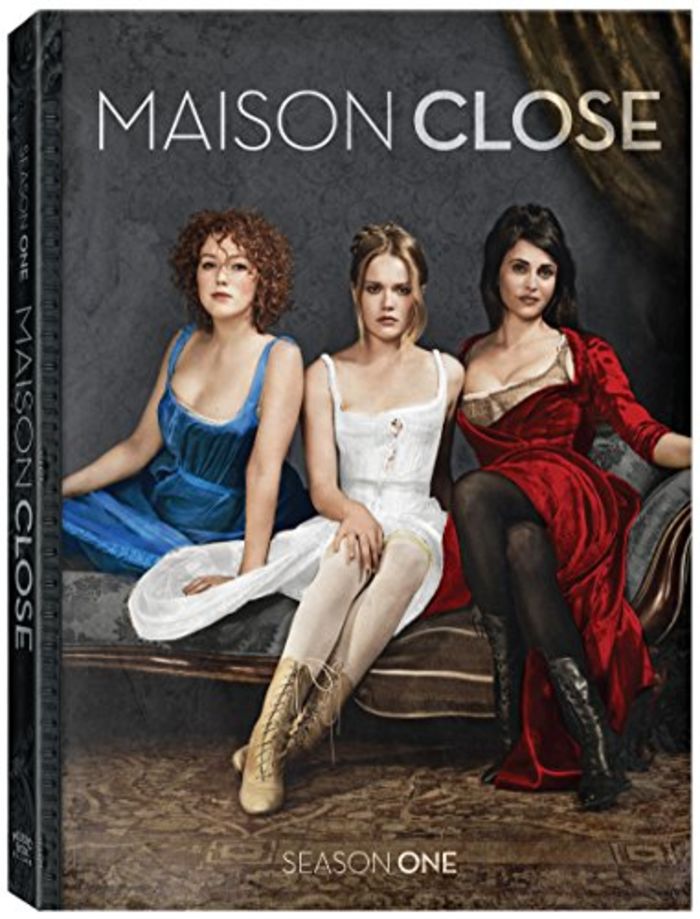
Maison Close is to be commended for its un-sugarcoated, to the point of cringeworthy, depiction of life within a Parisian brothel, here referred to as le Paradis. In this existential universe nobody’s totally good or bad though our sympathies are generally with the prostitutes, the Madam, and even her gruff first lieutenant. The many characters and their complex story lines would do a Dostoevsky novel proud, and they are rendered in well-textured shadings. Much of the credit for the series’ success must go to the performers who inhabit their roles with an impressive commitment and believability. By contrast there are few bright spots among the boorish clients (mostly rich folks and heavy-handed representatives of officialdom) and the various parasitical, mostly male, hangers-on. On the whole these are a pretty squalid, amoral lot and don’t elicit a lot of sympathy from us. Yes, it was a man’s world in late Ninetennth Century Paris, but even then the times were a changin’, and the various nuances of the changes, i.e. how the women gradually gained the upper hand – at least within the walls of the Paradis – are eminently fascinating to watch. Maison Close isn’t history though historical events very much figure into the story line: the recent Franco Prussian War, here referred to simply as The Siege, and the subsequent rise – and fall – of the Paris Commune, were very fresh in everyone’s memory. Circumstances dictated that folks did what they had to do to simply to survive. As a result, bargains were sometimes made with the devil. – Byran
While the idea of a French (and French language) period piece concerning prostitutes in a brothel in the 1870s might give the impression of something bawdy, tawdry, and titillating for international audiences, this is hardly what we are given in Maison Close. While hardly “prudish” in its storytelling, Maison Close focuses much more on the drama and the dark side of the age-old profession that it depicts than the sexy or pornographic aspects that might be expected from such a program (particularly from France where censorship is much more lax in that area). There are moments of humor and positivity and each of the major characters is given a depth and interesting development. Even in the most difficult moments Maison Close is difficult to look away from. The acting is excellent and the situations are intriguing. The set design and costuming is so amazing in conveying 1871 Paris that it hardly is noticed after the first episode, meaning it is so successful in bringing you into the world of the show that it simply seems normal. This realism extends to the storytelling. – Pop Matters
Set in 1871.
Starring Valerie Karsenti, Anne Charrier, Jemima West, Catherine Hosmalin.
In French with English subtitles.
Note: Adult subject matter, not suitable for children.