
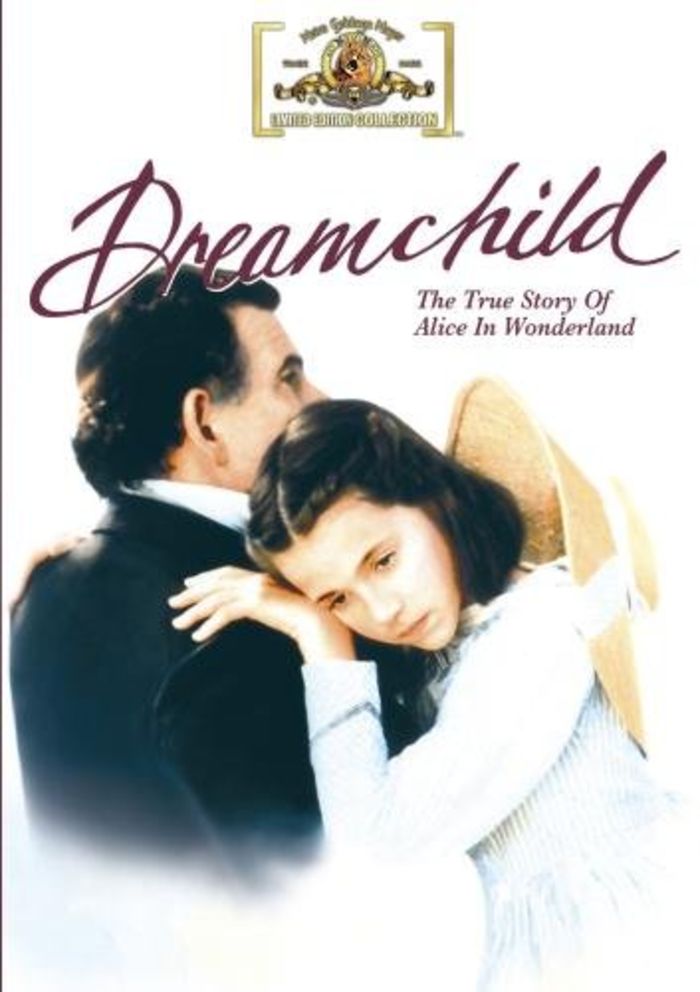
A fictionalised account of Alice Liddell, the child who inspired Lewis Carroll’s Alice’s Adventures in Wonderland, the story is told from the point of view of the elderly Alice (now the widowed Mrs Hargreaves) as she travels to the United States from England to receive an honorary degree from Columbia University celebrating the centenary of Lewis Carroll’s birth. The film evolves from the factual to the hallucinatory as Alice revisits her memories of the Reverend Charles Dodgson (Holm), in Victorian-era Oxford to her immediate present in Depression-era New York. Accompanied by a shy young orphan named Lucy (Cowper), old Alice must make her way through the modern world of tabloid journalism and commercial exploitation while attempting to come to peace with her conflicted childhood with the Oxford don.
“Dreamchild” is a remarkable film in many ways, not least because it gives itself such freedom of style and subject matter. For example, all of the creatures in Alice’s fantasies appear as muppetlike creations done by Jim Henson and his Creature Shop, but they are not Muppets. The movie has some subtle points to make with them. At the same time, “Dreamchild” is not unremittingly grim, and it is not just a case study. The newspaper world of New York in the 1930s is re-created with style and humor, and the love story between the two young people is handled with a lot of cheerful energy. “Dreamchild” is an ambitious movie that tries to do a lot of things, and does most of them surprisingly well. – Roger Ebert
Starring Coral Browne, Ian Holm, Peter Gallagher.
Note: This is not a film for children. The Depression-era setting of the film is in 1932, when Alice turned 80, and the flashbacks take place about 70 years prior, in Victorian England.