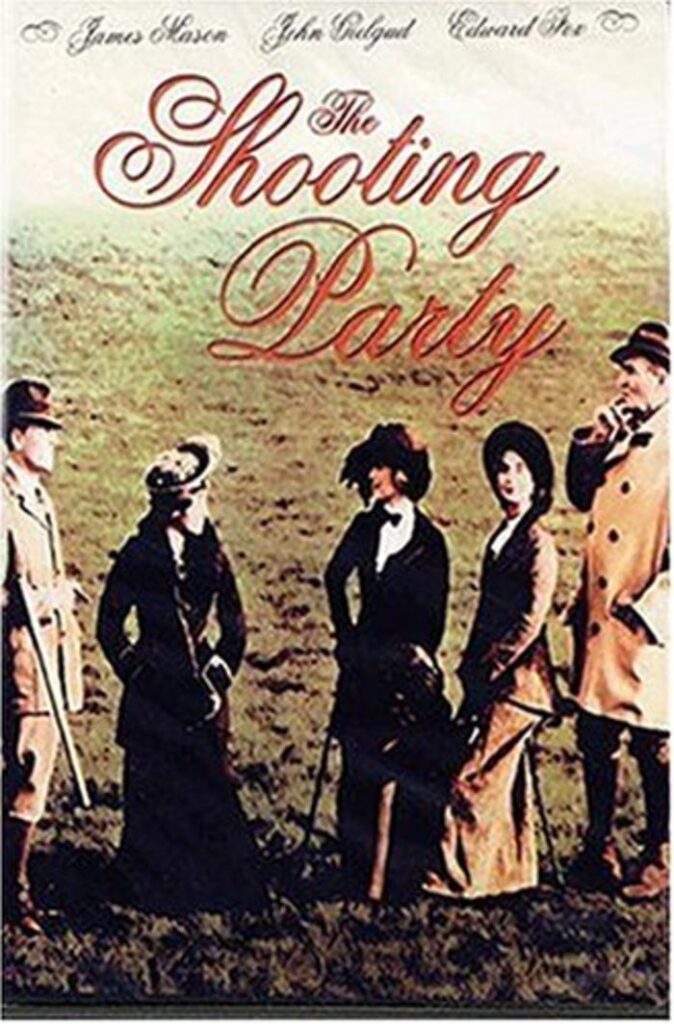
Set in 1913 England, on the brink of what would be the war to end all wars, the British film classic The Shooting Party focuses on an assortment of upper-crust acquaintances who gather for a weekend of hunting and society niceties (billiards, cards, draping oneself in jewels the evening after stomping around all day in the muck). Presiding over the festivities is a masterful James Mason as Sir Randolph Nettleby, a sort of benevolent dictator of his breathtaking estate, as his family and friends dip in and out of the action, adhering to the strict code of class conduct for all of their affairs–sport, self-advancement, illicit love. Though the weekend is supposed to be a holiday, there is subtle, ominous foreshadowing in the very first scenes, of the men lined up in a meadow, as though troops on a battlefield, taking out ducks and hares with an almost dispassionate relish. Mason as Nettleby has rarely been better–crisp, bemused, comfortable in his role but not quite in his own skin. The score by John Scott is transportative. The film was remastered and rereleased on DVD in 2006. –A.T. Hurley
The movie develops quietly. There are vignettes of life in the great country house: a masquerade party, the backstairs games of the children, a small boy’s love for his pet duck, the sly intrigues and flirtations, the sometimes bitter private conversations between husbands and wives. The dialogue in the film is frequently at that level of very quiet, ironic economy. – Roger Ebert
Starring James Mason, Edward Fox, Dorothy Tutin, John Gielgud, Gordon Jackson.