
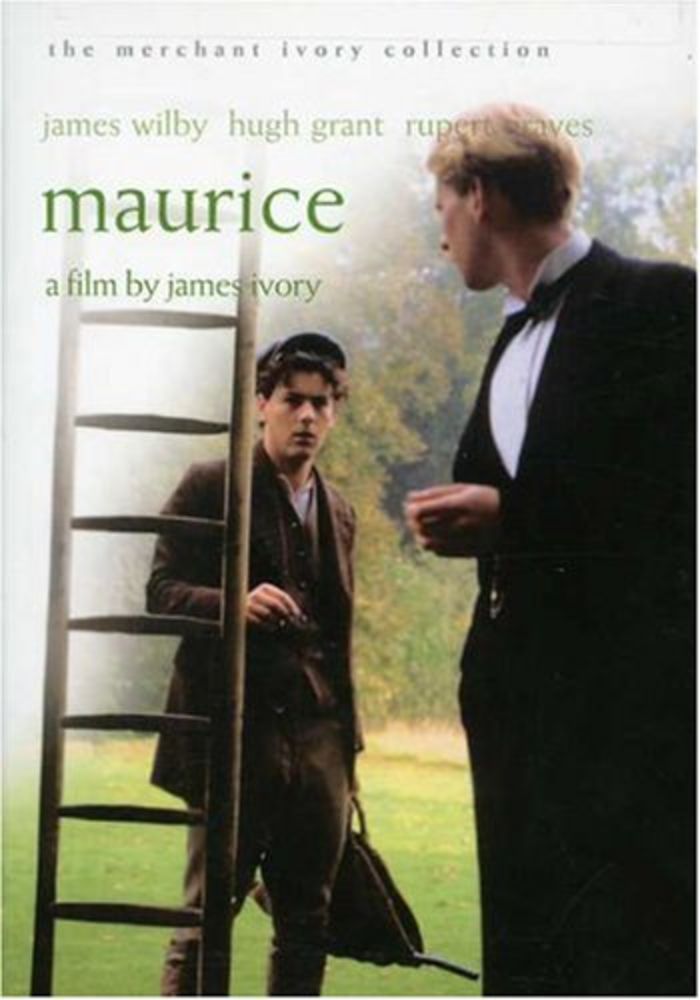
Set against the stifling conformity of pre-World War I English society, E.M. Forster’s Maurice is a story of coming to terms with one’s sexuality and identity in the face of disapproval and misunderstanding. Maurice Hall (James Wilby) and Clive Durham (Hugh Grant) find themselves in love at Cambridge. In a time when homosexuality was punishable by imprisonment, the two must keep their feelings for one another a complete secret, even though Clive refuses to allow their relationship to move beyond the boundaries of “platonic” love. After a friend is arrested and disgraced for “the unspeakable crime of the Greeks,” Clive abandons his forbidden love, marries, and enters into the political arena. Maurice, however, struggles with questions of his identity and self-confidence, even seeking the help of a hypnotist to rid himself of his undeniable urges. But while staying with Clive and his shallow wife, Anne, Maurice is seduced by the affectionate and yearning servant Alec Scudder, (Rupert Graves), an event that brings about profound changes in Maurice’s life and outlook. Sparking direction by James Ivory, a distinguished performance from the ensemble cast, and a charged score by Richard Robbins all combine to create a film of undeniable power, one that is both romantic and moving, and a story of love and self-discovery for all audiences.
Merchant and Ivory tell this story in a film so handsome to look at and so intelligently acted that it is worth seeing just to regard the production. Scene after scene is perfectly created: a languorous afternoon floating on the river behind the Cambridge colleges; a desultory cricket game between masters and servants; the daily routine of college life; visits to country estates and town homes; the settings of the rooms. – Roger Ebert
Starring James Wilby, Hugh Grant, Rupert Graves, Denholm Elliott, Simon Callow.