Based on a classical myth and the inspiration for My Fair Lady, Pygmalion is Shaw’s most familiar and popular work. Of all of Shaw’s plays, Pygmalion is without the doubt the most beloved and popularly received, if not the most significant in literary terms. Pygmalion takes place in London, England in the early twentieth century.
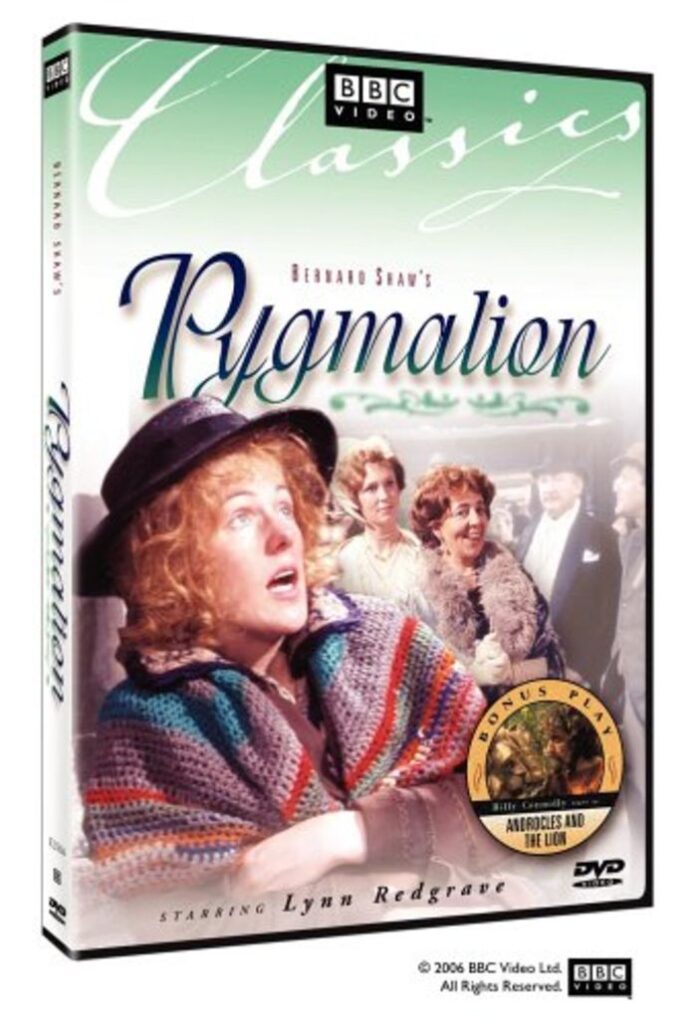
One of the finest television adaptations of George Bernard Shaw’s 1912 class satire, this 1973 British production of Pygmalion stars Lynn Redgrave as a marvelously accessible, non-cartoonish, and likable Eliza Doolittle, the Cockney flower girl who becomes the subject of a socio-scientific experiment by phonetics expert Henry Higgins (James Villiers). Betting that he can turn the yowling, filthy guttersnipe Eliza into a proper lady who can pass herself off as an aristocrat, Higgins puts the poor girl through some difficult paces, then develops an affection for her that he’s ill-equipped to show. Ronald Fraser is on hand as Colonel Pickering, the warm and considerate Watson to Higgins’ imperious Holmes. (Fraser would play Pickering again in a 1981 TV version.) Emrys James is wonderful as Eliza’s father, a chimney sweep who laments the fact that Higgins’ influence has inadvertently turned him into a middle-class patriarch with unwanted responsibilities. Shaw’s piercing comedy about the limits of class and personal character, and their impact on one another is both potent and enjoyable in this excellent showcase. A bonus: a 60-minute, 1983 television version of Shaw’s Androcles and the Lion, starring Billy Connolly. –Tom Keogh
Starring Lynn Redgrave, James Villiers, Ronald Fraser, Lally Bowers, Angela Baddeley, Nicholas Jones, and Emrys James.
Included in the BBC Classic Drama Collection as DVD 65 along with[ Mrs. Warren’s Profession](http://amzn.to/1L0SA84) – George Bernard Shaw (1972), Starring Coral Browne, Derek Godfrey, James Grout, Shaw’s play, written in 1893, but banned until 1925, is undoubtedly tame by today’s standards, but its ideas, passionately debated by mother and daughter, are still provocative.