
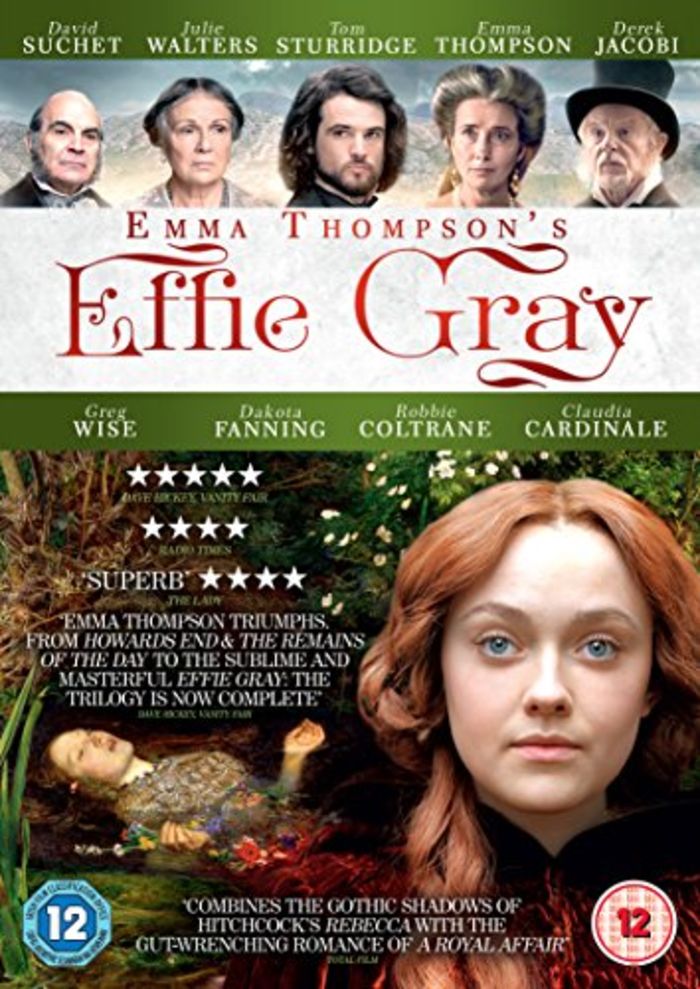
In EFFIE GRAY, Emma Thompson peers boldly inside the forbidden realms of Victorian society through the true story of the marriage of Effie Gray and renowned art critic John Ruskin, courageously exposing a secret world of unrequited passion hidden behind the veil of an opulent public life. Set in an era when neither divorce, nor gay marriage were an option, EFFIE GRAY is the story of a beautiful young woman coming of age, and finding her own voice in a world where women were expected to be seen but not heard. Within the lush environs of a world brimming with art, painting and high society and feverishly bucolic scenes of the Scottish countryside, EFFIE GRAY explores the intricate relationship between sexual intolerance, repression and desire which continue to permeate society today. In this impeccably crafted period drama, Thompson delicately and incisively probes the marital politics of the Victorian Era, and beyond.
Starring Emma Thompson, Claudia Cardinale, Derek Jacobi, Robbie Coltrane, Julie Walters.
Note: Most found this film just too slow and sad without enough counterbalance. It is here because the production is quality with its fine costumes and scenery, because of Emma Thompson, and because Variety called the film “a literate, lovingly mounted and exceedingly well-behaved historical biopic that has sidled into British theaters after two years of less polite legal conflicts. Emma Thompson’s first adult-oriented film screenplay since her Oscar-winning work on “Sense and Sensibility” finds a fascinating human subject in the title character — the socially and sexually suppressed wife of leading Victorian art critic John Ruskin — but this admirable, watercolor-delicate tale of individual feminist emancipation never quite blooms into living color, hampered by spotty casting and Richard Laxton’s overly deliberate direction. Lush production values and name players — notably a conscientious Dakota Fanning in the lead — guarantee international exposure, but commercial prospects are as muted as the film itself.”