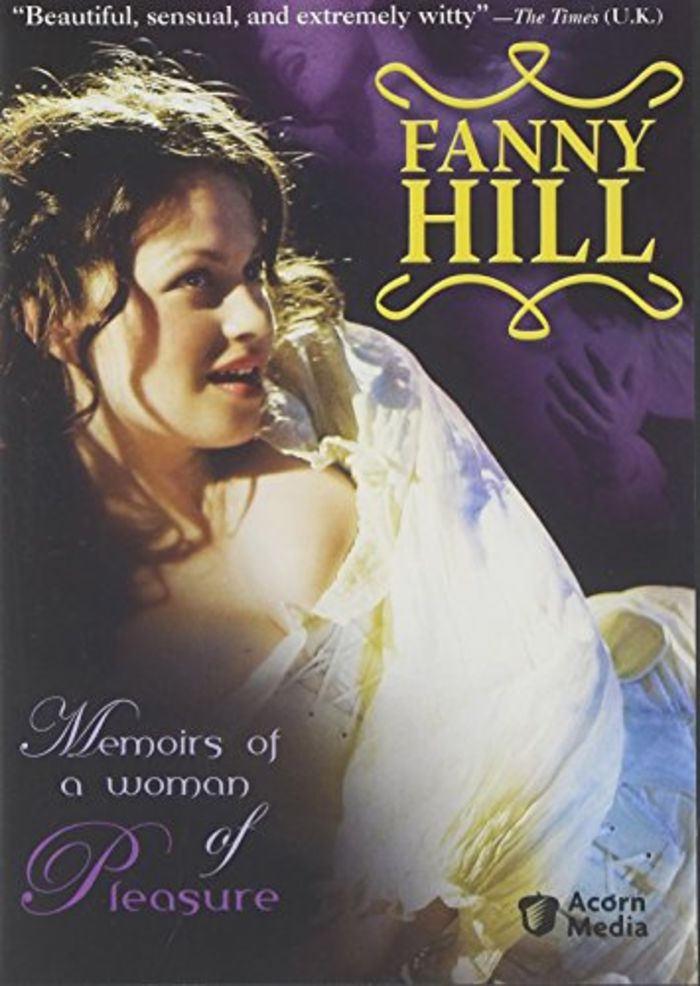
A bawdy romp based on the 18th-century erotic classic. Screenwriter Andrew Davies (Bridget Jones’s Diary, Bleak House) brings all of his sly, stylish wit to this adaptation of 18th-century Britain’s most notorious novel. With a mischievous glint in her eye and plenty of knowing winks, Fanny relates her journey from wholesome naïf to worldly woman. After losing her parents to smallpox, the poor country girl travels to London, where she falls into prostitution under the guidance of an infamous madam. Forced to take a series of lovers to survive, Fanny learns to relish sensual delights — but reserves her heart for her one true love. Showing a playfulness that matches her beauty, newcomer Rebecca Night sparkles in the title role. Samantha Bond (The World Is Not Enough), Alison Steadman (Pride and Prejudice), Philip Jackson (Agatha Christie’s Poirot), and Hugo Speer (The Full Monty) join her in this unabashedly sexy tale of one woman’s appetite for independence and pleasure.
The bodice-ripper that begat all bodice-rippers, John Clelland’s 18th century book, Fanny Hill: Memoirs of a Woman of Pleasure, has finally been given the screen adaptation it deserves. This 2007 British TV presentation is cheeky and very erotic, yet subtly emotional and painstakingly costumed and set. Fanny herself, played by young, appealing newcomer TK Night, narrates the film, which goes a long way toward defusing what is essentially a tale of a woman forced into prostitution to live. The way this Fanny tells it, she has a rollicking good time learning about her own, and others’, erotic lives–whilst fitting in rather splendidly in 18th century London. The narration, with true relish in Night’s voice, helps overcome the distaste one might have of the human slavery angle (much like Pretty Woman’s neo-feminist Julia Roberts did in that film). So the viewer is allowed to sit back and savor the sensuality, and the film’s real romantic thread, without guilt.
“Virtue is always preferable to vice,” says the pragmatic Fanny, “but we can’t always choose, can we?” Andrew Davies, the prolific screenwriter who produced Bridget Jones and many Jane Austen productions, among many others, adapted the book and has managed to preserve the sensuality alongside the true longings of our heroine. The production may shock some fans of BBC period dramas, as the nudity and sexual content are far more explicit, and regularly occurring, than in most. But it works here, as the point is that Fanny enjoys her sensual side and that learning and growing helps her form what it is she truly wants. The sets and costumes are lush, and the cast is spot-on, including Night, as well as supporting actors Hugo Speer, Emma Stansfield, and Alex Robertson. Near the end, Fanny muses, “As to the moral of my story… Must one always have morals?” Apparently not–at least not to have a splendid time, which this Fanny Hill more than delivers. –A.T. Hurley