
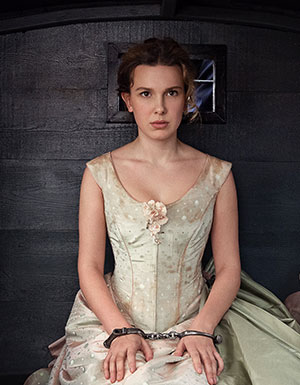
With “Enola Holmes 3” dropping on Netflix July 1, 2026, we look back at “Enola Holmes 2” and share our top 5 reasons to enjoy the rollicking, romantic and inspiring story of Sherlock Holmes’ younger (and smarter) sister who seeks justice for those overlooked by Victorian London’s rich and powerful.

To help keep this site running: Willow and Thatch may receive a commission when you click on any of the links on our site and make a purchase after doing so.
Inspired by Nancy Springer’s series of the same name and directly following the events of “Enola Holmes” (2020), this new installment features encore performances by Millie Bobby Brown as Enola, Henry Cavill as Sherlock, Louis Partridge as Lord Tewkesbury, and Helena Bonham Carter as Enola’s enigmatic mother. While “Enola Holmes 2” is not based directly on one of Springer’s books, screenwriter Jack Thorne and director Harry Bradbeer craft a tale that might be even more exciting than the first.
The film should be at the top of your must-watch list, especially if you are planning on catching “Enola Holmes 3.”
5 Reasons to Watch Enola Homes 2

It’s Another Inspiring Feminist Adventure
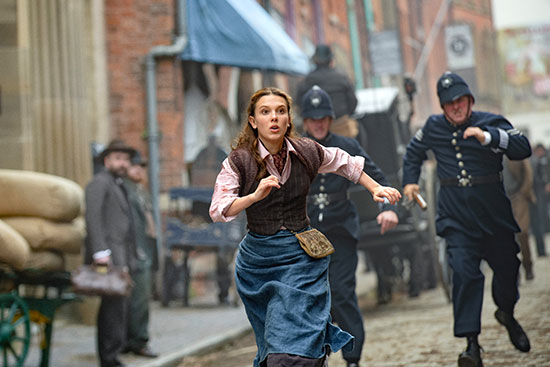
Enola has launched her own London detective agency to capitalize on the success of her first case. Her potential clients, however, all believe her brother solved the case, and no one actually wants to work with her. Enola is just about to close up shop and head home when Bessie, a young match girl, asks for help looking for her sister Sarah, who’s disappeared. The case takes her deep into the world of London’s exploited working class, as she investigates Bessie’s match factory, seedy flats in Whitechapel, and a bawdy dance hall. Enola quickly realizes how little London’s high society cares for girls like Bessie and Sarah, and she’s determined to seek justice for them.
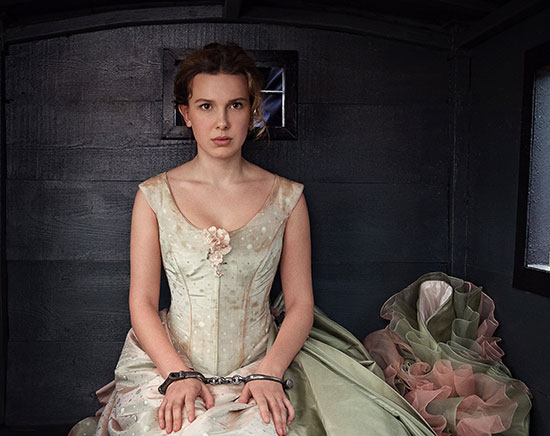
Based on true events, the case forces Enola to band together with other girls and women. Bessie, Sarah, and their friends can only find the justice they deserve when they work together, and the ending of this particular case is sweet indeed. It may even inspire you to do a little historical research of your own.
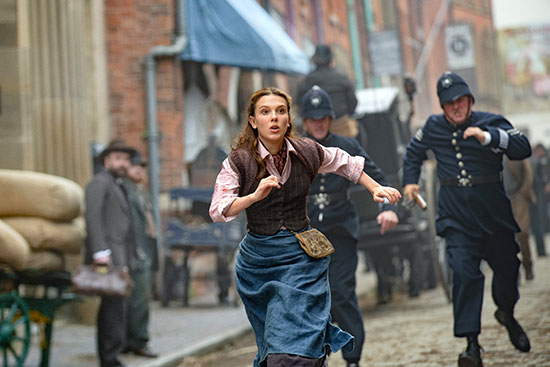
Enola Comes into Her Own
We learned at the start of the first film that Enola’s mother named her “Alone,” spelled backwards. Indeed, she spent much of her previous adventure working on her own, as she sought to free herself from her brothers’ control. She launches her new investigation entirely on her own, but the deeper she gets into the case, the more she realizes she can no longer rely solely upon her own wits. Enola will need to learn to seek help from others: from her mother, who helps her out of a particularly sticky situation; from her brother, who reluctantly allows her to see the inside of the legendary 221B Baker Street flat; and from Tewkesbury, who’s valiantly trying to reform Parliament. It’s a satisfying character arc that only deepens Enola’s growth in the first film.

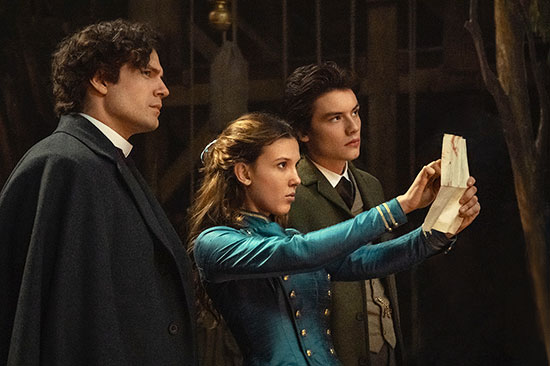
There’s Just the Right Amount of Romance
Speaking of Tewkesbury, the handsome young Lord can’t forget Enola after she saved his life in the first film. While she ignores his notes and requests as she launches her detective agency, she can’t stop herself from hanging about the park he so often passes through on his way to Parliament. Or from running into him at a ball where she’s attempting some undercover surveillance. Or from asking him for intimate dance lessons in the bathroom at said ball. Partridge and Brown share a delightfully gentle chemistry that blossoms into a comfortable teasing, and it’s immensely satisfying to watch their characters work out their feelings for each other.
You’ll Love to Hate the Villains
David Thewlis joins the cast as a truly despicable police superintendent, complete with a cane that taps menacingly on the cobblestones as he walks. He clearly hates Enola, and he has no great love for her brother, either, despite Sherlock’s history of helping the police with difficult cases. While Superintendent Grail isn’t the only villain of the film, he’s the easiest to hate out of an entire raft of arrogant men. All of them believe they’re smarter and more capable than Enola, but they stop short of parody, making them all the more menacing.
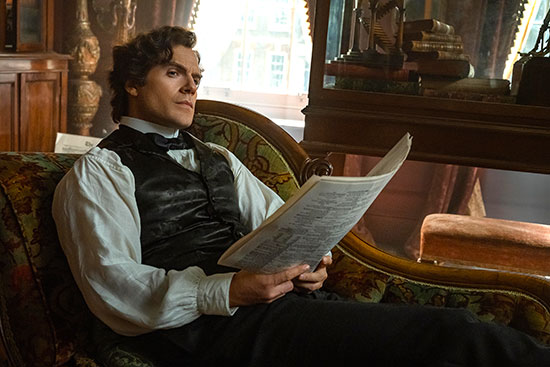
Moriarty!
We can’t share too much here for fear of spoilers, but it’s almost a given that in any Sherlock Holmes series, the great detective’s brilliant nemesis Moriarty will make an appearance. Let’s just say that “Enola Holmes 2” takes this assumption and runs with it in a delightfully creative way that reinforces the film’s deeper themes. We can’t wait for the third installment.
Abby Murphy is the author of two young adult historical/historical fantasy novels, and is currently working on a dual-timeline historical novel about the Greenwich Village folk music revival. A member of SCBWI and The Historical Novel Society, she is represented by Laura Crockett of Triada US Literary Agency. Visit Writing in the Kitchen Sink, Abby’s Substack filled with her musings about books and the writing life.
If you enjoyed this post, see our reviews of Enola Holmes 1 and Ms. Fisher’s Modern Murder Mysteries, and read Were There Victorian Female Detectives?